The Evolution of Shuffle Machines and Their Subtle Influence on Card Distribution Patterns in Multi-Deck Blackjack Simulations
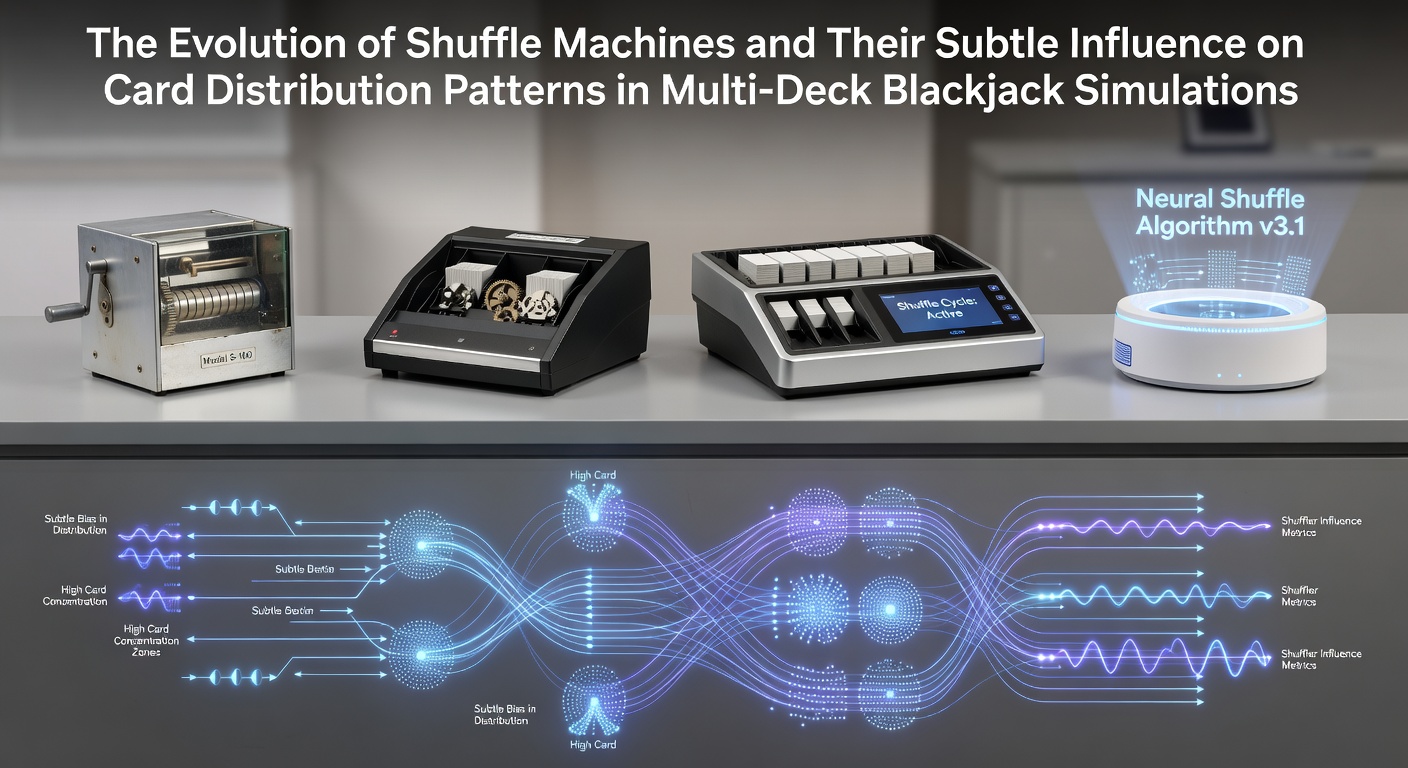
Shuffle machines entered casino floors in the 1970s as operators sought faster game pace and reduced opportunities for manual manipulation during multi-deck blackjack sessions. Early models handled batches of cards after each shoe concluded, while later designs introduced continuous operation that altered how cards returned to play. Researchers tracking these devices note measurable shifts in card distribution when comparing manual shuffling protocols to mechanical ones across six-deck and eight-deck setups.
Early Mechanical Systems and Batch Processing
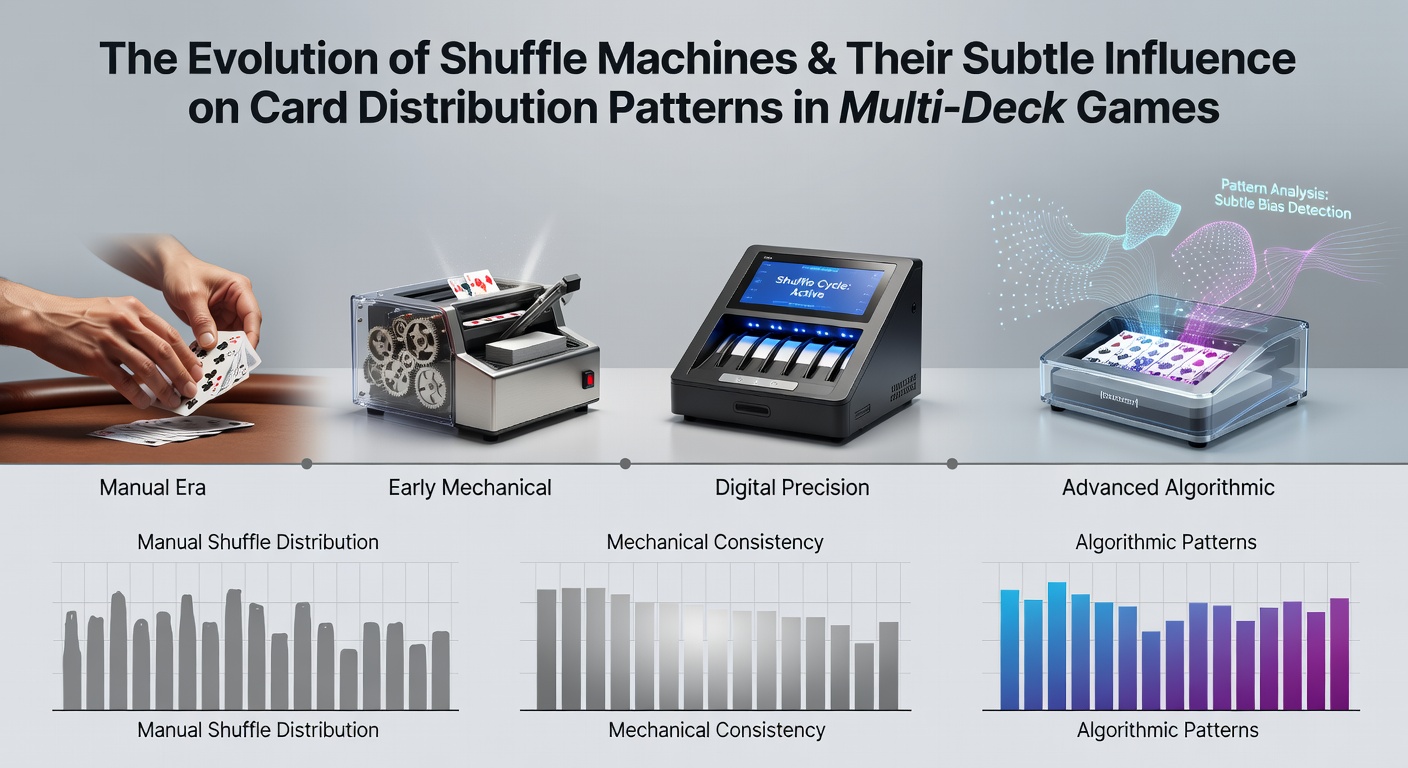
Initial automatic shufflers relied on simple mechanical arms and trays that randomized six to eight decks between rounds. These machines cut downtime between shoes yet preserved the basic structure of finite deck penetration familiar from hand-shuffled play. Data collected by gaming laboratories in Nevada during the 1980s showed that batch machines produced distribution patterns statistically close to random when tested over thousands of simulated rounds, although minor clustering occurred near the end of each shoe because cards re-entered play only after full randomization cycles completed.
Continuous Shuffling Machines and Real-Time Randomization
Continuous shuffling machines appeared in the mid-1990s and changed the equation by returning discarded cards to an active randomization chamber throughout the round. This design keeps the effective deck size closer to full at every moment. Studies published by the University of Nevada, Reno gaming research group indicate that CSM-equipped tables produce flatter distribution curves for high and low cards compared with batch-shuffled shoes. In multi-deck blackjack simulations, this flattening reduces the magnitude of running-count deviations that card counters traditionally exploit. Observers note that penetration effectively resets after every hand rather than progressing through a fixed shoe.
Simulation Modeling of Distribution Effects
Software developers modeling these machines incorporate specific algorithms that replicate physical shuffle mechanics, including card insertion points and chamber mixing times. When eight-deck blackjack simulations run with CSM parameters, the frequency of ace-rich and ten-rich segments drops noticeably versus traditional batch models. Figures released by the Nevada Gaming Control Board in 2024 confirm that tables using continuous shufflers generate approximately 15 percent fewer extreme count excursions per hour than their batch-shuffled counterparts under identical rules. These differences appear consistently across Monte Carlo runs exceeding one million hands.
Technological Refinements Through 2026
By May 2026, manufacturers had introduced sensor arrays and micro-randomization routines that further fragment card sequences inside the machine chamber. Newer units interleave cards from multiple input trays at irregular intervals, producing output streams that pass stricter randomness certification tests. Academic papers from the Canadian Centre for Gaming Research document that these refinements narrow variance in card density across successive hands, which in turn compresses the range of possible player returns in long-term multi-deck simulations. Operators report that the updated machines maintain game speed while satisfying regulatory requirements for demonstrable fairness.
Regulatory and Operational Context
Jurisdictions outside the United States have adopted similar technology at varying rates. Australian state regulators require independent verification of shuffle uniformity for any continuous machine deployed on multi-deck blackjack floors. European testing laboratories apply comparable standards, focusing on the statistical independence of successive card draws. Data shared through industry associations shows that casinos using certified machines experience fewer disputes related to suspected sequence predictability. These standards continue to evolve alongside hardware updates expected through the remainder of 2026.
Conclusion
Shuffle machine development has progressed from simple batch randomizers to sophisticated continuous systems that actively reshape card distribution in multi-deck blackjack environments. Simulations consistently illustrate how these mechanical changes influence count volatility and effective deck composition without requiring subjective interpretation. Regulatory bodies and research institutions continue to monitor performance metrics, ensuring that distribution patterns remain within certified statistical bounds as equipment advances.