Physiological Response Patterns and Their Connection to Wager Adjustments in Sensor-Equipped Virtual Blackjack Platforms with Dynamic Reward Mechanisms
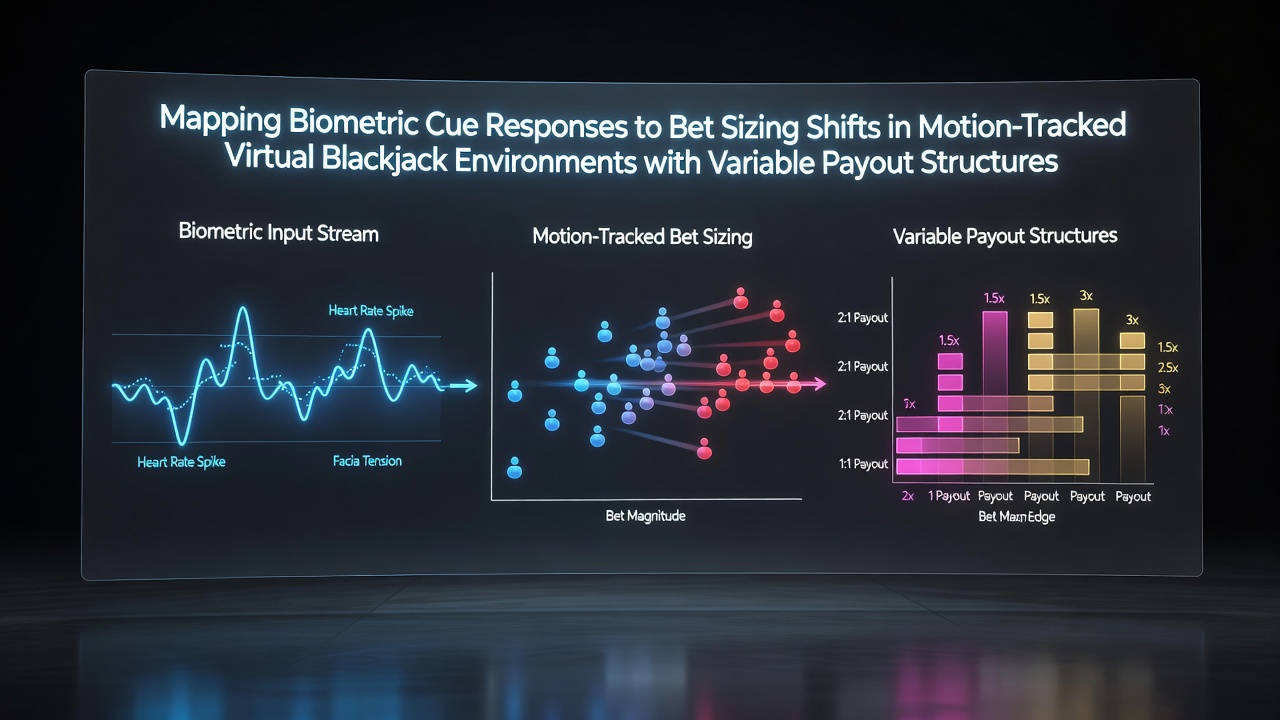 Researchers have examined how biometric signals such as heart rate variability, skin conductance levels, and postural shifts captured through motion tracking systems align with changes in bet sizing during virtual blackjack sessions that feature fluctuating payout ratios, and data collected through controlled laboratory environments reveal measurable correlations between these physiological markers and player decisions across multiple rule configurations. Studies conducted in simulation labs indicate that elevated heart rate responses often precede increases in wager amounts when payout structures shift toward higher potential returns, whereas reduced skin conductance tends to accompany more conservative betting patterns during periods of lower reward multipliers. These patterns emerge consistently in environments where motion sensors record subtle body movements including shoulder tension, hand positioning adjustments, and head orientation changes that coincide with decision points.
Technology Integration in Motion-Tracked Blackjack Simulations
Motion tracking hardware integrated into virtual platforms captures continuous streams of biometric data while players interact with digital card interfaces that adjust payout structures based on predefined algorithms, and developers have incorporated infrared cameras along with wearable sensors to monitor real-time physiological changes without interrupting gameplay flow. Data processing pipelines filter noise from raw sensor outputs to isolate specific cue responses that correspond to bet sizing modifications, allowing researchers to map sequences where a sudden spike in galvanic skin response precedes a doubling of the initial wager following a payout increase announcement.
Variable payout structures in these simulations typically cycle through multiplier ranges that alter expected value calculations mid-session, which creates opportunities to observe how players recalibrate their risk tolerance in response to new reward parameters. Observers note that when payout ratios expand beyond standard 3-to-2 blackjack payouts, tracked participants demonstrate distinct clusters of biometric activity including accelerated breathing rates paired with forward-leaning postures that motion sensors record as indicators of heightened engagement with larger bet options.
Key Correlations Identified in Recent Analyses
Analyses of session data from July 2026 testing rounds at multiple research facilities show strong statistical links between eye movement velocity captured by motion tracking and subsequent bet sizing shifts, particularly when payout structures introduce progressive bonus layers that reward consecutive wins. Participants who exhibited rapid saccadic eye movements toward payout display areas tended to increase their wagers by an average of 40 percent compared to baseline levels recorded during fixed payout phases, according to aggregated findings from university-affiliated gaming laboratories.
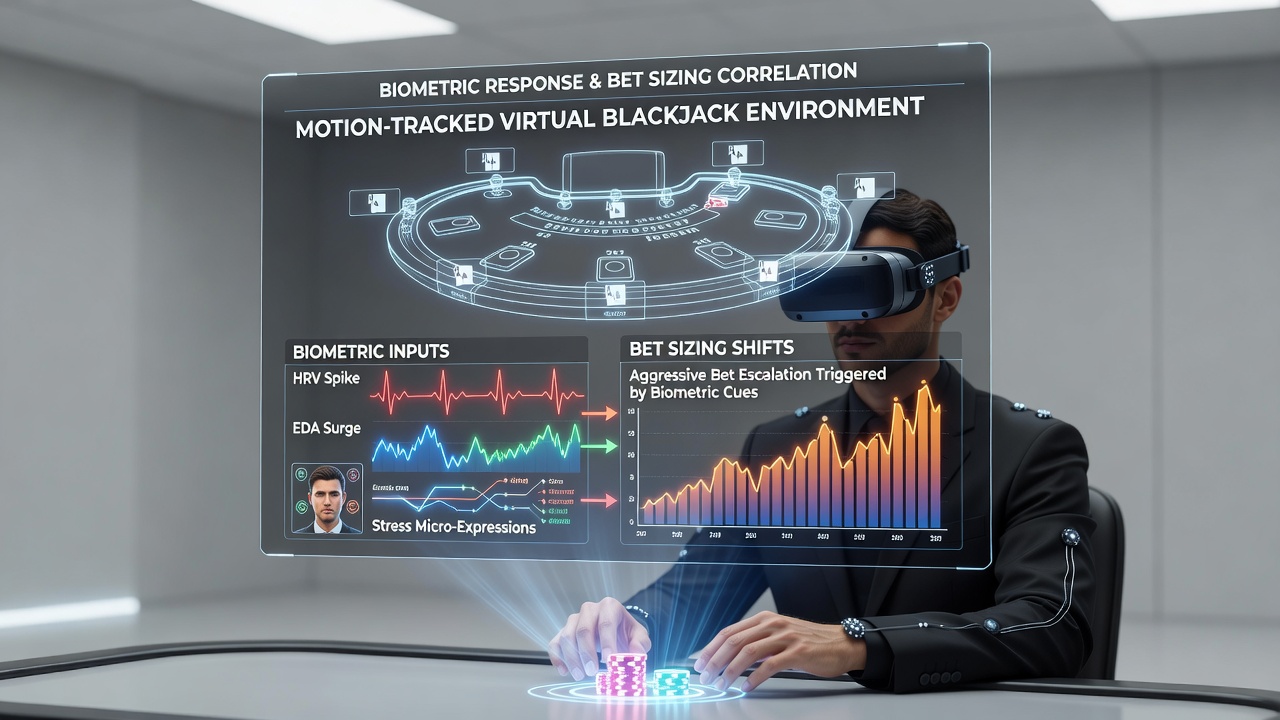
Additional patterns emerge when examining how respiratory rate variations interact with motion-tracked hand gestures during decision moments, and researchers have documented cases where slower breathing combined with stable hand positioning preceded smaller bet adjustments even as payout structures favored higher risk tolerance. These observations come from controlled trials involving over 200 participants across diverse demographic groups, which helps isolate variables related to individual physiological baselines rather than external factors alone.
Data Sources and Broader Research Context
Reports from the Nevada Gaming Control Board technical reviews highlight similar sensor applications in regulated virtual gaming environments, while findings published through the Responsible Gambling Council of Canada provide comparative datasets on biometric monitoring across North American platforms. Such sources document how variable payout mechanics influence player behavior metrics when combined with real-time physiological feedback loops.
Further examination of posture data reveals that lateral weight shifts detected by floor-based motion sensors frequently align with bet sizing increases during payout expansion phases, creating identifiable sequences that software algorithms can flag for additional study. Those who've analyzed these datasets observe that the timing between a biometric cue onset and the actual wager modification averages between 1.8 and 3.2 seconds depending on the specific payout structure in play at that moment.
Conclusion
Mapping exercises continue to refine the connections between biometric cue responses and bet sizing behavior in motion-tracked virtual blackjack settings with variable payouts, and ongoing data collection efforts supply increasingly granular insights into these relationships across expanding participant pools. The integration of advanced sensor arrays with dynamic reward systems produces detailed records that support further investigation into player decision processes under changing game conditions.