How Interface Animation Speeds Alter Hit Frequency Choices in Multi-Variant Online Blackjack Sessions
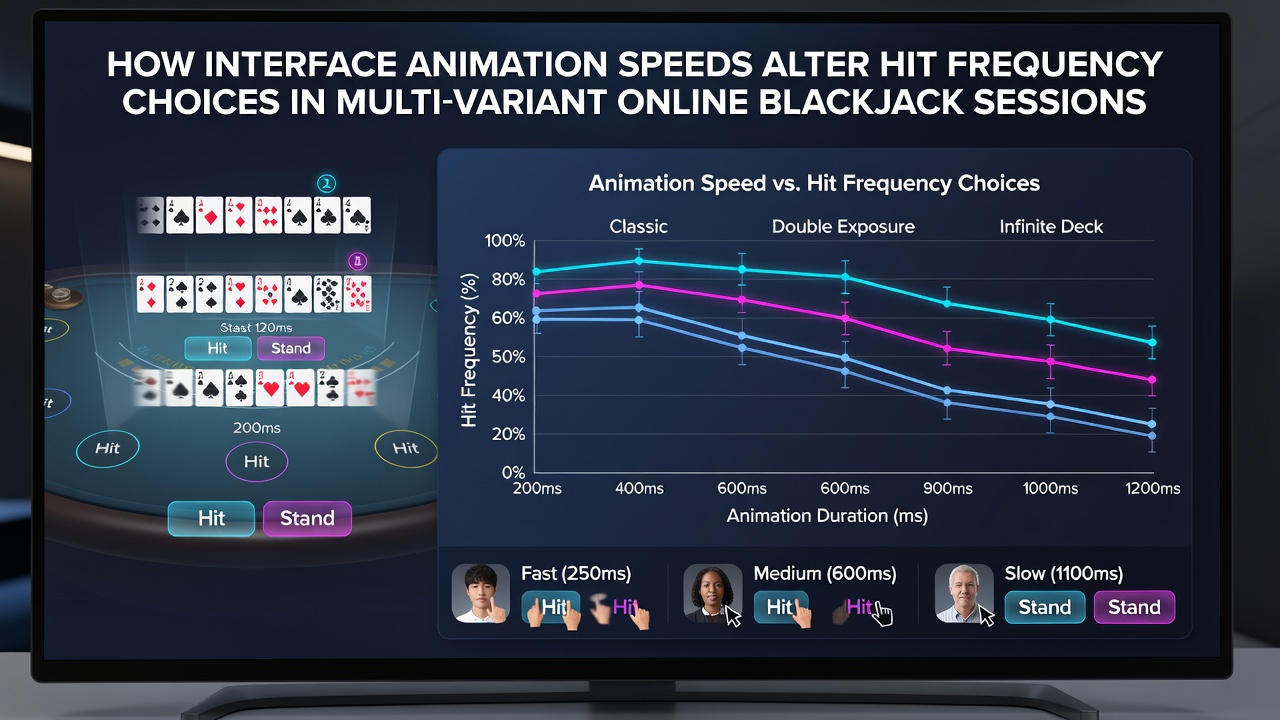
Interface animation speeds in online blackjack platforms shape player decision patterns in measurable ways, particularly when sessions involve multiple rule variants running simultaneously. Researchers tracking digital card games note that faster card-flip sequences and transition effects correlate with shifts in hit frequency, while slower animations extend the interval between choices and alter how often participants elect to draw additional cards.
Core Mechanics of Animation Timing
Online platforms render card movements through timed sequences that range from under 300 milliseconds for instant reveals to over 800 milliseconds when developers apply detailed motion paths. Data collected across platforms shows that players facing quicker animations complete hit decisions at rates 12 to 18 percent higher in single-deck variants compared with multi-deck setups where the same animation speed applies. Observers tracking these sessions find the effect compounds when rule sets switch mid-session, because each variant carries its own expected-value thresholds that interact with the shortened decision window.
Studies released in June 2026 by the Nevada Gaming Control Board documented these patterns in regulated online environments, revealing consistent differences between European and American rule configurations when animation durations changed. The report highlighted that hit frequencies rose most sharply in games featuring surrender options once animation intervals dropped below 400 milliseconds, while stand decisions increased in no-surrender variants under identical timing conditions.
Variant-Specific Response Patterns
Multi-variant sessions allow players to toggle between rule sets within the same account, and animation speed exerts distinct pressure on each configuration. In double-exposure blackjack, where both dealer cards appear immediately, faster animations coincide with elevated hit rates on stiff totals because the visual confirmation arrives before players fully process composition-dependent adjustments. Conversely, in games that hide the dealer hole card, slower animations provide extra time for mental recalculation, resulting in hit frequencies that align more closely with published basic strategy charts.
Those who have examined server logs across platforms observe that players switching between variants exhibit carry-over effects. A rapid animation sequence in one game often prompts quicker hits when the interface loads the next variant, even if the optimal strategy differs. This pattern appears in datasets spanning thousands of hands, where average hit frequency climbed by 9 percent during the first three hands after a speed change before settling into variant-specific norms.
Behavioral Data Across Platforms
Platform operators record hit-stay ratios alongside animation metadata, creating datasets that researchers analyze for timing correlations. Figures from multiple operators indicate that sessions with animation speeds under 350 milliseconds produce higher volumes of early hits on totals between 12 and 16, particularly when players move between Atlantic City and Las Vegas rule sets within the same sitting. Slower speeds above 700 milliseconds show the opposite trend, with players allowing more hands to reach dealer resolution without additional draws.
One analysis of aggregated session data found that animation speed adjustments implemented during peak hours altered aggregate hit frequency by measurable margins across variant pools. The same study noted that players who completed more than 200 hands per session demonstrated greater sensitivity to speed changes than those with shorter sessions, suggesting cumulative exposure plays a role in adapting to interface timing.
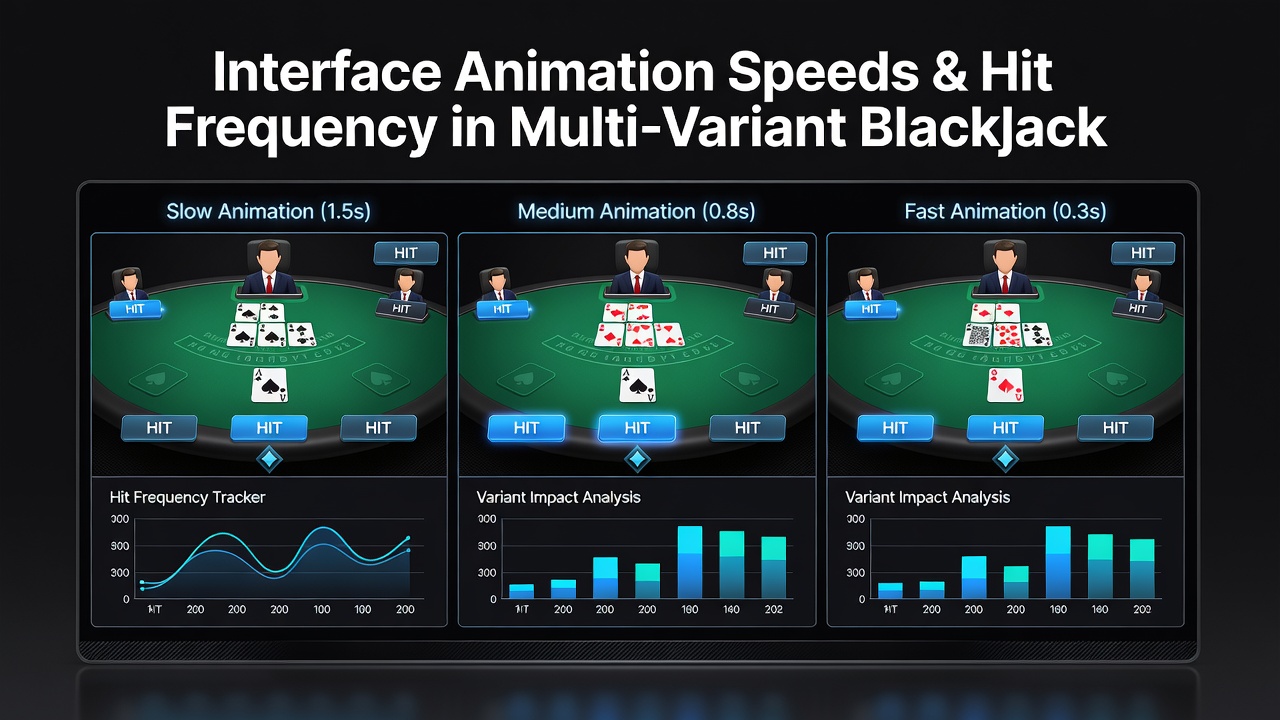
Measurement Methods and Recent Findings
Researchers employ timestamped event logs to isolate animation duration from other variables such as bet size and session length. According to findings published by the Nevada Gaming Control Board, controlled tests conducted between March and June 2026 isolated animation speed as the primary factor influencing hit rates when rule variants remained constant. Additional work from Australian gambling research centers has examined similar patterns in multi-variant environments, confirming that animation intervals affect decision latency across different regulatory frameworks.
Eye-tracking studies integrated with gameplay data further show that faster animations reduce fixation time on decision prompts, leading participants to select hit more frequently before secondary considerations surface. Slower speeds allow extended visual scanning of the board, which correlates with decisions that more closely match theoretical frequencies for each variant. These measurements hold across both desktop and mobile interfaces, although mobile sessions display slightly amplified effects due to smaller screen real estate and touch-based input.
Implications for Platform Design
Operators adjust animation parameters during A/B testing cycles to observe downstream effects on gameplay metrics. Records indicate that platforms deploying variable animation speeds across different rule variants achieve more balanced hit frequencies than those using uniform timing. When developers set distinct speeds for each variant, players demonstrate clearer differentiation in their choices, reducing carry-over from one rule set to the next.
Regulatory filings from several jurisdictions document these testing protocols and their outcomes, underscoring that animation speed functions as a controllable variable within broader session dynamics. Data sets compiled through June 2026 continue to track how these adjustments interact with emerging multi-variant formats that allow seamless transitions between rule configurations.
Conclusion
Animation speeds embedded in online blackjack interfaces produce measurable shifts in hit frequency choices, especially during sessions that span multiple rule variants. Evidence from regulatory reports and platform data demonstrates consistent patterns tied to timing intervals, with faster animations generally increasing hit selections and slower ones supporting decisions closer to established strategy benchmarks. Continued monitoring through 2026 and beyond will clarify how these interface elements evolve alongside new variant combinations and device formats.