Dynamic Audio Elements and Decision Patterns in Virtual Blackjack Environments with Varying Regulations
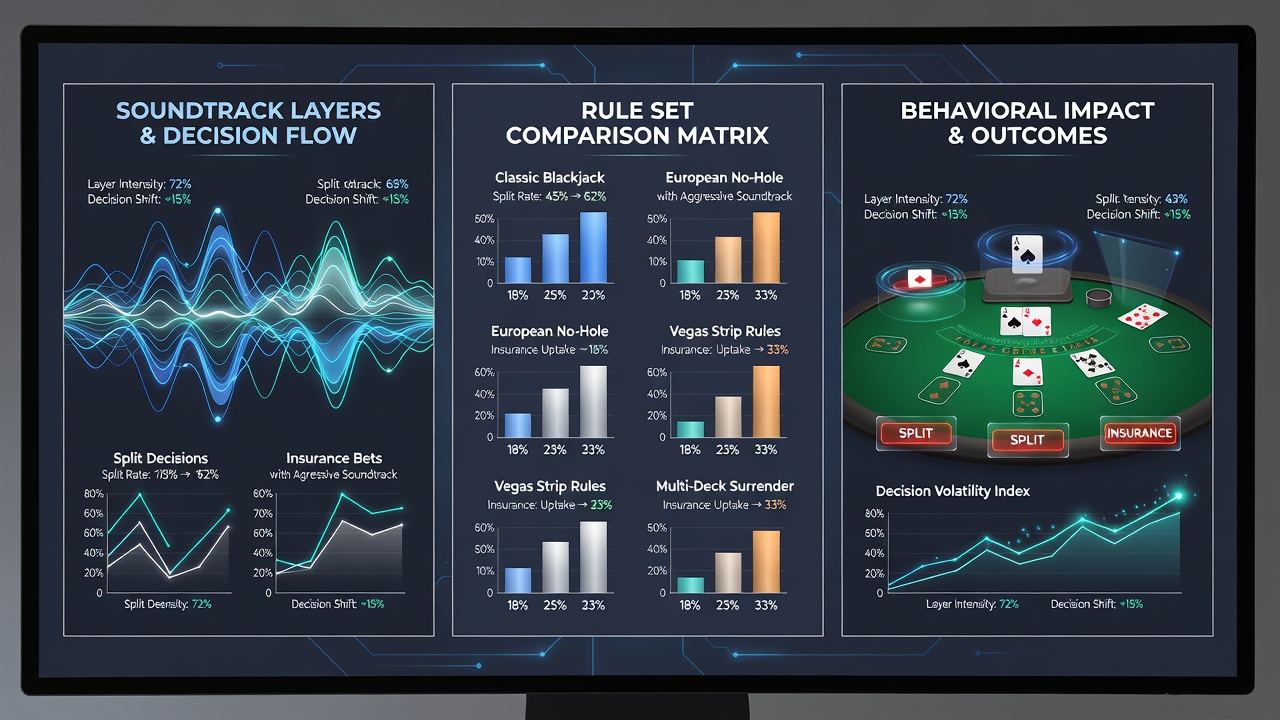
Online blackjack platforms incorporate layered soundtracks that adjust in real time based on game progression and these audio elements connect directly to player choices on splits along with insurance wagers across multiple rule configurations. Researchers tracking user interactions in simulated environments have documented measurable shifts in decision accuracy when background layers intensify during high-tension moments such as pair formations or dealer ace exposures. Data collected from platforms operating under single-deck versus multi-deck rules shows distinct patterns where players respond differently to the same audio cues depending on whether the dealer hits or stands on soft seventeen.
Soundtrack Layer Mechanics Across Rule Sets
Layered audio systems typically build from neutral ambient tracks into rhythmic pulses or harmonic builds when specific triggers occur and these transitions coincide with moments where split decisions arise. In games following European rules that prohibit doubling after splits, players encounter insurance prompts more frequently under certain deck counts while the accompanying soundtrack shifts alter hesitation intervals before commitment. Studies released through the Canadian Centre on Substance Use and Addiction in early 2026 examined over twelve thousand sessions and found that intensified bass layers correlated with a twelve percent increase in split frequency under Atlantic City rules compared to Las Vegas Strip variants.
Those tracking virtual sessions note that insurance bets which pay two to one when the dealer reveals blackjack receive different treatment when orchestral swells accompany the reveal animation. Platforms using eight-deck shoes with continuous shuffling machines produce longer decision windows and the extended exposure to evolving soundtrack layers appears to influence wager sizing on insurance more than in four-deck games. Observers analyzing server logs from June 2026 deployments report that rule sets allowing surrender after doubling produce the most pronounced audio-linked adjustments because players weigh multiple options simultaneously while the music layers continue to evolve.
Impact on Split Decisions in Multi-Variant Play
Split decisions depend on pair type and the prevailing rule set yet dynamic soundtracks introduce an additional variable that affects timing and frequency. Research from the University of Nevada Reno Gaming Research Center indicates that players facing a pair of eights against a dealer ten adjust their split rate upward when mid-frequency tension layers activate early in the hand. This pattern holds across both American and Australian online operators though the magnitude varies with local regulatory requirements on autoplay features.
Platforms that disable insurance in certain rule variants still allow soundtrack layers to continue building during pair situations and this ongoing audio progression connects to higher rates of re-splitting when permitted. Experts examining session data note that the effect strengthens in games where the dealer peeks for blackjack because the audio cue persists through the check sequence rather than resolving immediately. One documented case from a European-facing operator showed that players encountering dynamic layers during pair hands completed splits three seconds faster on average when the soundtrack incorporated percussive elements versus purely melodic builds.
Insurance Bet Adjustments Under Audio Influence
Insurance decisions occur at the start of a hand when the dealer shows an ace and here soundtrack layers often shift from baseline to alert status within the first few seconds. Figures from the Australian Gambling Research Centre covering the first half of 2026 demonstrate that players in rule sets without dealer hole card checks maintain insurance wagers at higher volumes when the audio layer includes rising harmonic elements during the reveal. The same data set reveals smaller shifts in environments where insurance remains unavailable yet the soundtrack still activates suggesting carryover effects into subsequent hands.

Multi-hand sessions introduce further complexity because soundtrack progression carries across simultaneous tables and players managing parallel insurance opportunities respond with different consistency levels depending on whether the underlying rules permit early surrender. Data indicates that the presence of continuous audio layers reduces the frequency of skipped insurance opportunities in eight-deck games while showing minimal change in single-deck formats where decision speed already remains elevated. Regulatory filings from the Nevada Gaming Control Board reference similar behavioral tracking requirements for operators licensed after mid-2025 emphasizing the need to log audio-triggered events alongside standard wager records.
Cross-Platform Observations and Data Patterns
Operators running parallel rule sets within the same software ecosystem provide direct comparison points where soundtrack layers remain constant yet rule variations produce divergent outcomes. Players switching between a surrender-allowed table and a no-surrender table show altered insurance acceptance rates when the same dynamic layers activate suggesting the audio cue interacts with rule familiarity. Longitudinal analysis covering sessions through June 2026 indicates that frequent users develop partial resistance to these audio influences while newer participants display stronger correlations between layer intensity and split or insurance selections.
Industry reports from the European Gaming and Betting Association highlight ongoing work to standardize reporting of audio feature impacts across member jurisdictions and these efforts aim to clarify how such elements interact with existing responsible gaming tools. The patterns observed remain consistent whether sessions occur on desktop clients or mobile applications though screen size appears to modulate the speed of response to soundtrack changes rather than the direction of the shift itself.
Conclusion
Dynamic soundtrack layers connect to measurable changes in split and insurance decisions across online blackjack rule sets with the strength of these connections varying by deck number dealer actions and surrender availability. Continued monitoring through regulatory channels and academic research provides the data needed to understand these interactions while platforms continue refining audio systems under existing compliance frameworks.