Correlating Eye-Tracking Data with Strategic Shifts in Virtual Poker Table Dynamics
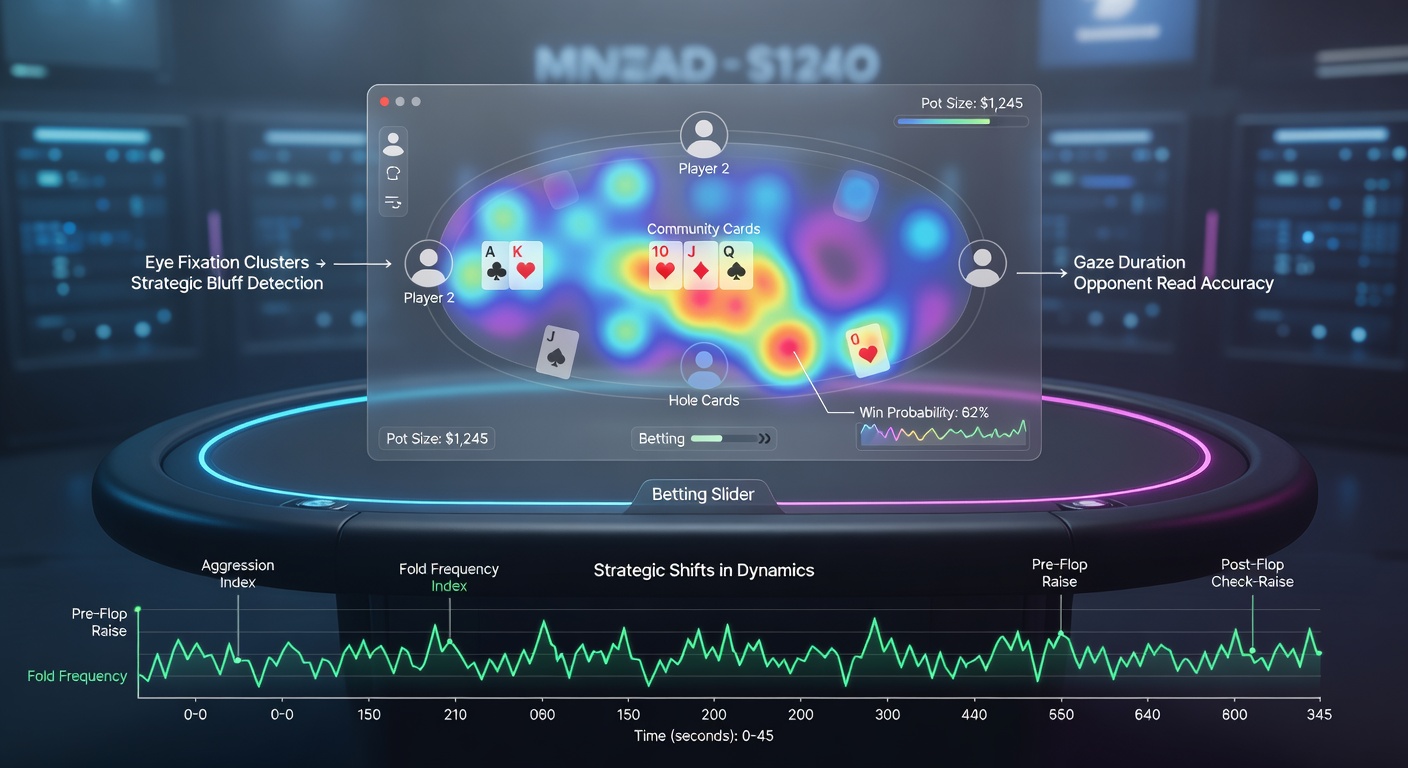
Virtual poker platforms have integrated eye-tracking technology to map player attention across digital tables, and researchers continue to examine how these patterns align with changes in betting aggression, bluff frequency, and position-based adjustments. Data collection occurs through webcam-based systems or specialized hardware that records fixation points, saccades, and dwell times on cards, opponent avatars, and pot indicators, while algorithms correlate these metrics with hand histories and action logs in real time.
Eye-Tracking Methods in Digital Poker Environments
Platforms record gaze data at 60 to 120 frames per second during live sessions, and analysts segment the information into pre-flop, flop, turn, and river phases to identify shifts in visual attention before each decision point. Studies show that prolonged fixations on stack sizes often precede larger bet sizing, whereas rapid saccades between community cards and opponent positions correlate with increased check-raising frequencies in multi-way pots. Software overlays translate raw coordinates into heat maps that highlight regions of interest, allowing operators to flag deviations from baseline patterns established over hundreds of hands.
Key Correlations Between Gaze and Strategy Changes
Research indicates that players who spend more time examining their hole cards before acting tend to tighten their opening ranges in early position, while those whose eyes linger on the timer or chat window demonstrate higher fold rates under time pressure. Data from aggregated sessions reveals that sudden increases in fixation duration on the pot graphic frequently accompany all-in shoves on the river, and this pattern holds across no-limit hold'em and pot-limit omaha variants. Observers note that gaze aversion from opponent avatars before a call can signal uncertainty, yet the same behavior appears in strong hands when players attempt to mask strength through deliberate misdirection.
Position and Opponent Modeling
Eye-tracking datasets also capture how attention distribution changes based on seating relative to the dealer button. Players in late position direct more visual resources toward early-position opponents before making continuation bets, and this focus intensifies when stack depths create leverage for post-flop maneuvers. Figures from platform analytics demonstrate that shifts in gaze entropy, or the randomness of eye movements across the interface, rise sharply during multi-street bluffs compared with value betting sequences, providing operators with additional signals for integrity monitoring.
Integration with Player Behavior Models
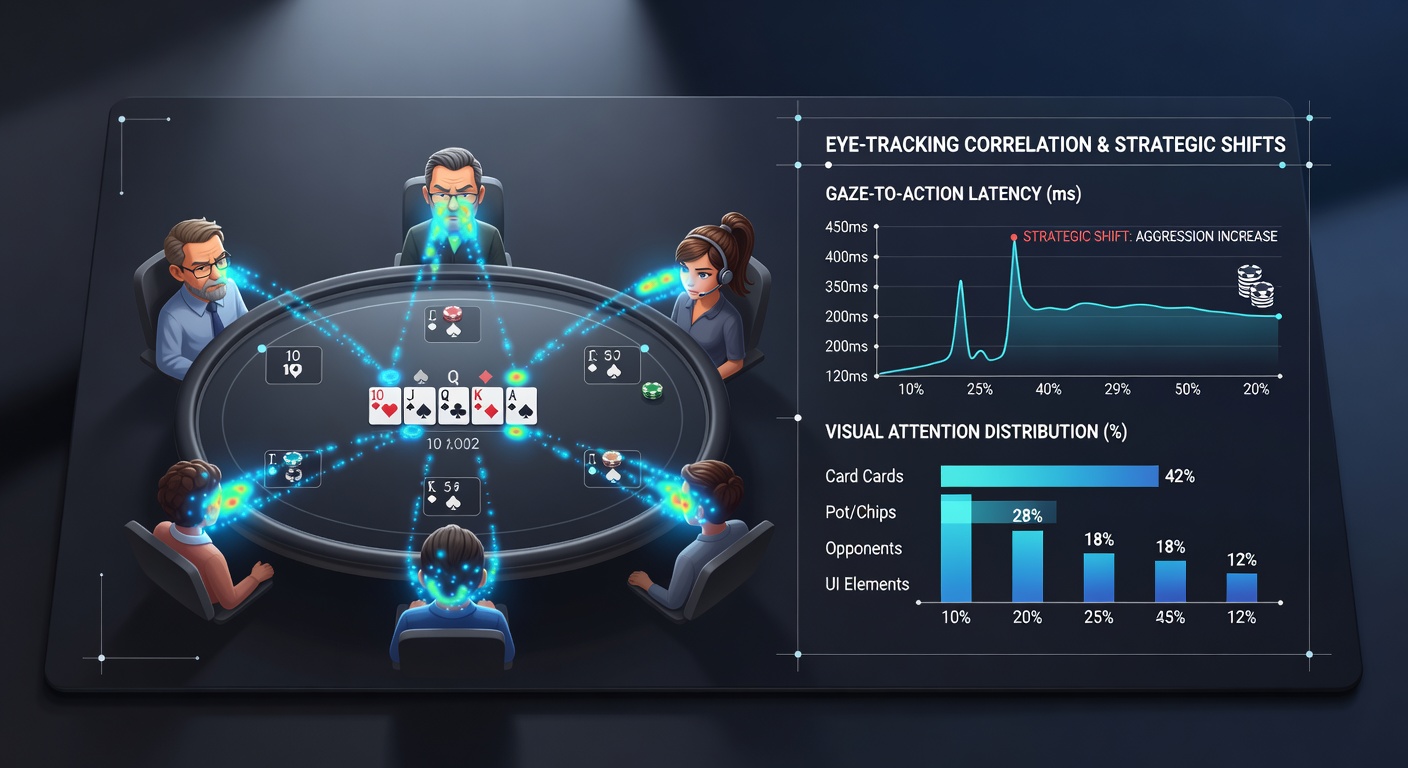
Developers combine eye-tracking outputs with established metrics such as VPIP, PFR, and aggression factor to refine predictive models of strategic adaptation. When gaze data shows repeated attention to a specific opponent's previous action history, subsequent bet sizes often increase, suggesting real-time exploitation of perceived weaknesses. In June 2026 several platforms plan to release updated dashboards that display these correlations to tournament directors and compliance teams, enabling faster identification of coordinated play or account sharing through synchronized attention patterns.
Regulatory and Research Perspectives
Academic teams at institutions including the University of Nevada have published findings that link eye movement velocity to decision latency across thousands of recorded hands, and these reports appear in peer-reviewed gaming studies. University of Nevada gaming research further connects dwell time on betting sliders to variance in hand selection under different blind structures. Canadian regulatory bodies have examined similar datasets to assess responsible gambling interventions, noting that abrupt changes in visual scanning often precede extended losing streaks or session terminations.
Technical Challenges and Data Accuracy
Calibration drift remains a concern when players change lighting conditions or seating posture mid-session, and platforms apply machine-learning corrections to maintain alignment between recorded coordinates and interface elements. False positives occur when external distractions pull attention away from the screen, yet filtering algorithms that cross-reference mouse movements and keystroke timing reduce these errors substantially. Aggregated results across millions of hands show that correlations between gaze metrics and strategic shifts strengthen when sessions exceed 500 hands, because individual baselines become statistically reliable.
Future Applications in Virtual Poker
Engineers continue to explore real-time feedback systems that could alert players to their own attention biases during play, although such tools remain in testing phases. Tournament organizers have expressed interest in using anonymized eye-tracking summaries to adjust table balancing algorithms, ensuring that players with similar visual decision profiles face balanced competition. As virtual reality poker environments expand, full-headset tracking will capture additional vectors such as head orientation and blink rates, extending the dataset beyond two-dimensional screen coordinates.
Conclusion
Eye-tracking correlations with strategic adjustments continue to provide measurable insights into how attention allocation influences betting patterns and positional play across virtual poker tables. Continued refinement of collection methods and analytical models will likely expand the utility of these datasets for both platform operators and academic researchers focused on decision science in digital gaming environments.