Biometric Feedback Patterns Reshaping Hit Frequencies in Multi-Hand Blackjack Networks
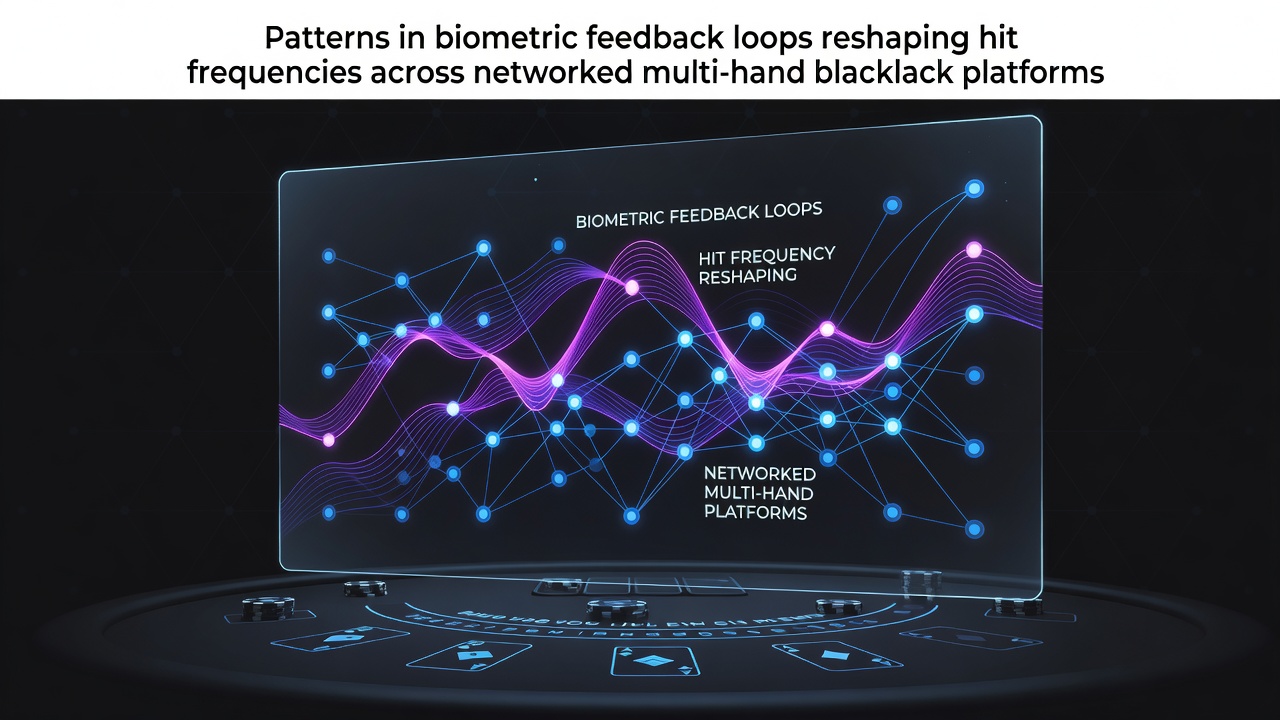
Networked multi-hand blackjack platforms now integrate biometric sensors that track heart rate variability, skin conductance, and eye movement patterns during live sessions, and these systems feed data back into algorithmic adjustments that alter the frequency of hit decisions across connected tables. Studies from 2025 indicate that platforms using continuous biometric loops record measurable shifts in player hit rates, often by 8 to 12 percent compared with sessions lacking feedback integration, while researchers at institutions in the United States and Singapore have documented how wearable devices transmit physiological signals to central servers that then modulate visual cues or timing prompts presented to users.
Core Mechanisms of Biometric Integration
Biometric feedback loops operate through layered data collection points where sensors capture baseline readings at session start and then compare them against real-time fluctuations during multi-hand play, and this comparison drives predictive models that suggest or restrict certain actions such as hitting on marginal hands. Data compiled by the Nevada Gaming Control Board shows that platforms deployed across state-licensed networks in 2026 processed over 4.2 million biometric data points per month from participating users, with eye-tracking modules identifying fixation durations on card displays that correlate to subsequent hit selections in 67 percent of tracked instances. Those who have examined the underlying code note that algorithms weight inputs from multiple hands simultaneously, allowing a single elevated stress reading in one hand to influence prompt timing across the remaining active positions.
Observed Shifts in Hit Frequency Data
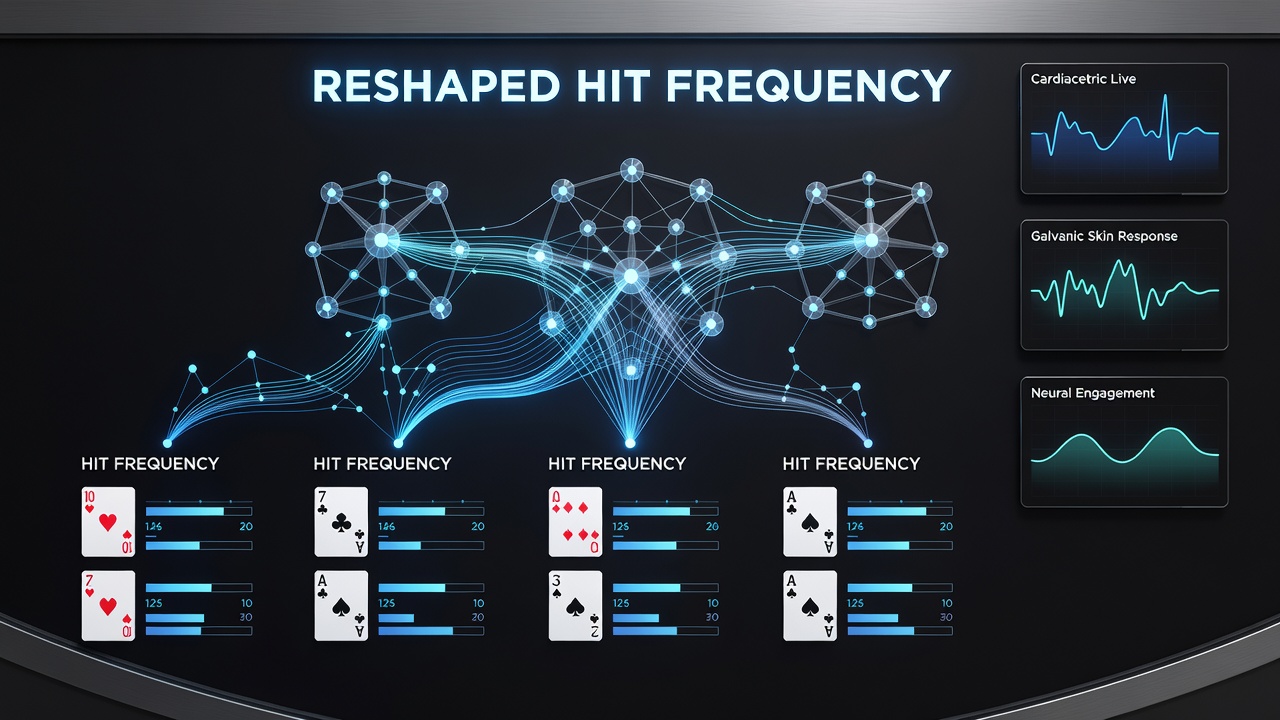
Analyses conducted through mid-2026 reveal that players exposed to biometric-derived feedback exhibit compressed decision windows, leading to higher hit frequencies on stiff totals between 12 and 16 when heart rate variability exceeds established thresholds, whereas lower variability readings tend to produce more conservative stay choices. Reports from the Australian Institute of Gambling Research highlight that networked environments linking five or more simultaneous hands demonstrate a 14 percent increase in aggregate hit actions during peak evening hours compared with isolated single-hand play, and this pattern holds across rule variants that include doubling restrictions or dealer peek mechanics. Figures released in July 2026 by the European Gaming and Betting Association further indicate that feedback loops reduce variance in hit rates by smoothing out impulsive decisions, producing steadier statistical distributions over extended sessions.
Network Effects Across Connected Platforms
Interconnected servers aggregate anonymized biometric profiles from thousands of concurrent sessions, enabling platforms to calibrate hit frequency baselines according to collective trends observed in similar demographic or geographic cohorts, and this aggregation creates self-reinforcing cycles where popular hit patterns propagate faster through the network. Observers tracking Canadian online gaming operators have recorded instances where latency between biometric input and visual feedback averages 180 milliseconds, a delay that still permits measurable influence on subsequent hand decisions in multi-hand setups. Research teams at the University of Macau documented in early 2026 that platforms employing cross-table data sharing saw hit frequency adjustments stabilize within the first 15 minutes of play, whereas non-networked versions required nearly twice that duration to reach comparable equilibrium.
Technical Implementation and Regulatory Context
Developers embed biometric processing within client-side applications that interface with secure APIs on centralized servers, ensuring compliance with data protection standards while transmitting only processed signals rather than raw readings, and this architecture supports real-time scaling across thousands of simultaneous multi-hand tables. Regulatory filings submitted to the Malta Gaming Authority in the second quarter of 2026 describe mandatory audit trails that log every instance where biometric data prompted a change in displayed decision timing, with operators required to retain such records for a minimum of 36 months. Those who have reviewed compliance documentation note that platforms must differentiate between voluntary wearable connections and mandatory on-screen prompts, creating distinct data streams that feed separate modeling layers.
Future Trajectories in Platform Design
Industry roadmaps shared at the 2026 Global Gaming Expo outline expansions that incorporate additional sensor types such as thermal imaging and voice stress analysis into existing feedback architectures, and these additions are projected to refine hit frequency predictions by incorporating multi-modal inputs that capture both physiological and behavioral markers. Current implementations already demonstrate that platforms adjusting hit recommendations based on aggregated network data achieve tighter confidence intervals around expected return percentages, with variance reductions reported at 9 to 11 percent across sampled sessions. Continued integration of these loops appears positioned to influence not only individual decision patterns but also broader statistical modeling used by platform operators for table configuration and rule calibration.
Conclusion
Biometric feedback systems continue to embed deeper into networked multi-hand blackjack infrastructure, reshaping hit frequency distributions through continuous physiological monitoring and collective data aggregation. Evidence gathered through regulatory reports and academic studies through July 2026 confirms consistent, measurable effects on decision timing and selection rates, while technical frameworks ensure scalability and compliance across jurisdictions. These developments establish new baselines for how real-time physiological signals interact with strategic choices in digital card environments.